Materials & craft
Mekong Delta biochar — the world's overlooked carbon sink
20M+ tonnes of rice husk per year and pyrolysis plants going EBC — why Mekong biochar deserves a place in your soil-amendment supply chain.
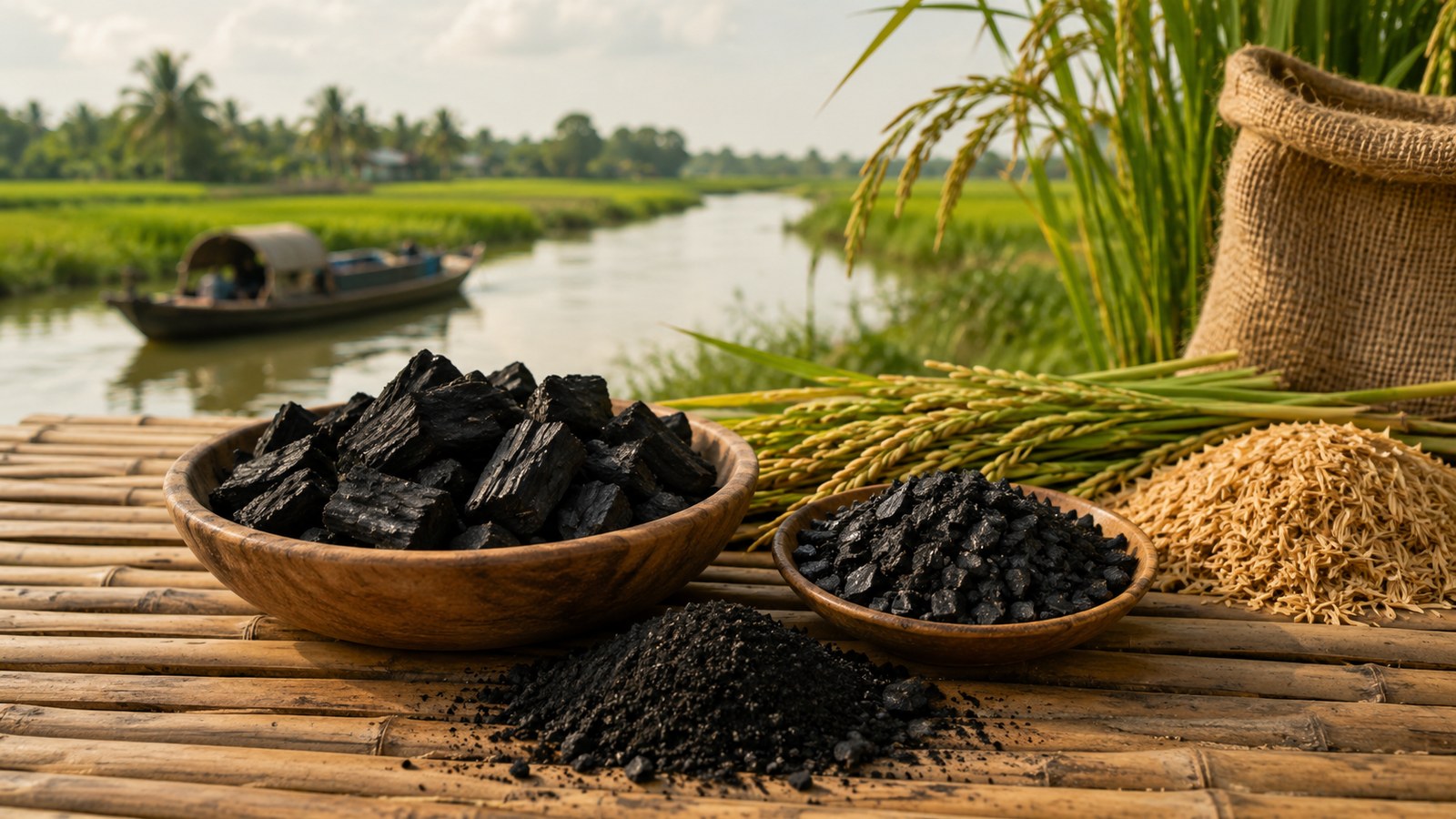
The Mekong Delta produces 24 million tonnes of rice annually — and roughly 5 million tonnes of rice husk as a by-product. Most is open-burned in fields, releasing CO₂ and PM2.5. A small but rapidly growing fraction is now being pyrolysed into biochar. Why biochar matters for buyers. Biochar is stable carbon — 70–90% of the carbon in the husk stays locked in the char for 100+ years when applied to soil. That's a permanent carbon removal credit, not a temporary offset. EU agricultural buyers, Australian carbon-credit aggregators, and US specialty soil brands are all building procurement programmes around it. The Vietnamese opportunity. Rice husk is feedstock-rich, year-round, geographically concentrated (An Giang, Dong Thap, Kien Giang), and currently under-valued. A well-run pyrolysis plant produces 250–500 kg of biochar per tonne of husk, plus syngas for energy recovery. FOB prices run USD 280–450 per tonne depending on grade. Certifications. The European Biochar Certificate (EBC) is the gold standard — it covers feedstock traceability, pyrolysis temperature, fixed carbon content, heavy metal limits, and PAH thresholds. Vietnamese plants achieving EBC are still few — single digits — which means buyers who lock in supply now get first-mover access. Specifications buyers ask for. Particle size (powder, granular, pellet), fixed carbon %, moisture %, ash content, pH, surface area (BET m²/g for soil amendment vs activated grade). Application matters: agricultural amendment, livestock feed additive, water filtration, or feedstock for specialty composites all need different specs. Logistics. Biochar ships in 25 kg PP bags or 1 t big bags. Container loading: 18–22 t per 40HQ. UN classification varies — check IMDG before shipping; some grades require dust-suppression measures. 5B Trading works with three EBC-track partner plants. RFQ response includes certification status and lab analysis from the most recent batch.