Trade & logistics
RCEP and Vietnam: tariff edge for Asian and Australian buyers
RCEP is in full force. What Japanese, Korean, Australian, and ASEAN buyers gain from Vietnam sourcing.
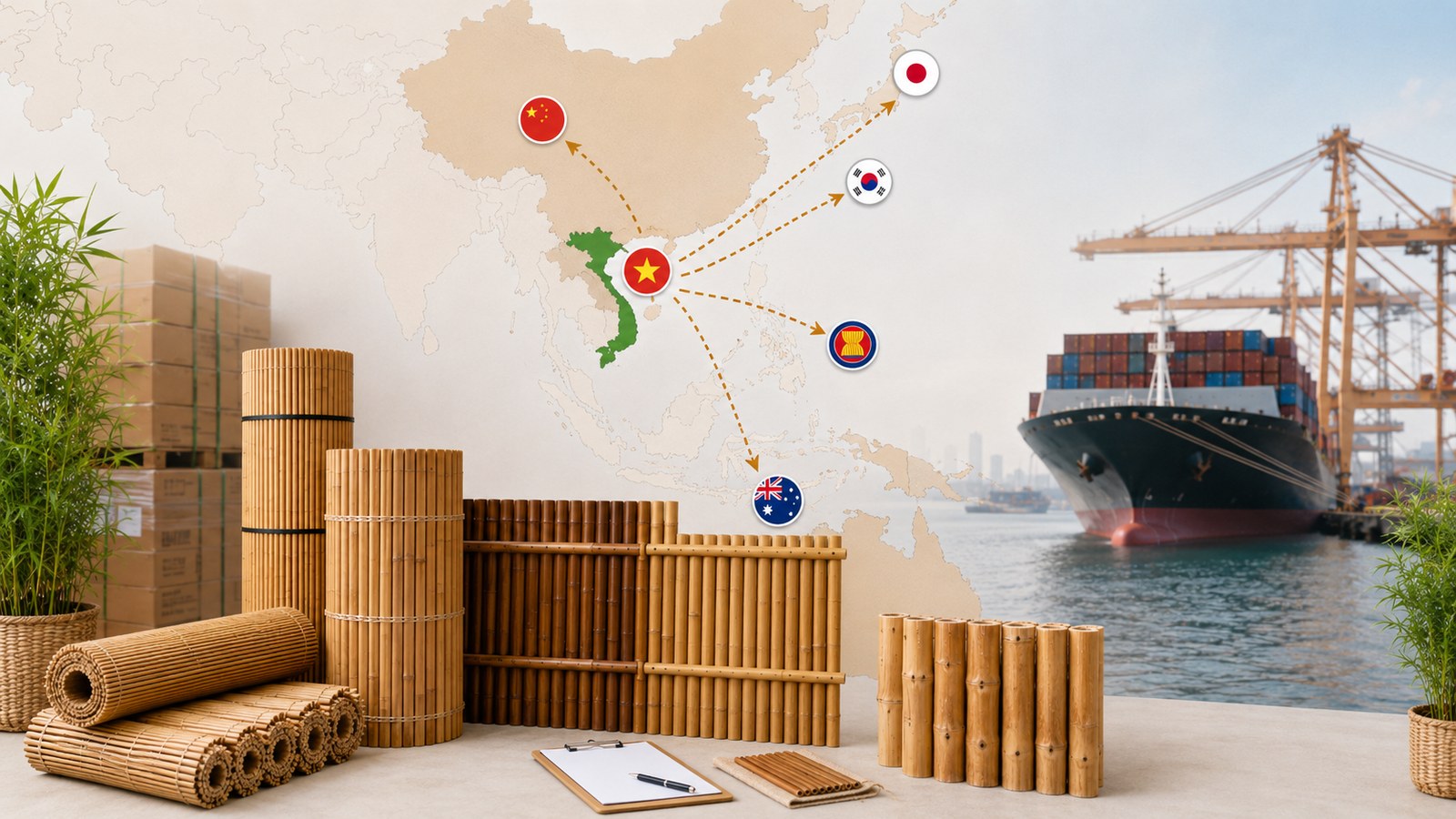
The Regional Comprehensive Economic Partnership (RCEP) is the world's largest trade agreement by GDP. For Asian and Australian buyers, it is reshaping the cost case for Vietnamese sourcing in 2026. RCEP in brief. 15 signatory countries: ASEAN-10 plus China, Japan, Korea, Australia, New Zealand. Entered into force progressively from 2022. By 2026, most tariff schedules have phased in. Roughly 90% of intra-RCEP goods trade now moves at preferential or zero tariff. Vietnam's position. Vietnam is a long-standing ASEAN member with bilateral FTAs already in place with Japan (VJEPA), Korea (VKFTA), and Australia (AANZFTA). RCEP overlays a multilateral framework that often offers better cumulative origin rules — meaning a product can use raw materials from any RCEP signatory and still qualify as Vietnamese-origin for preferential tariff. For Japanese buyers. Most consumer goods now duty-free under RCEP or VJEPA, whichever is better. Vietnamese bamboo, ceramics, silk, and textiles enter Japan at zero tariff with proper origin certification (Form AANZ, Form VJ, or RCEP CO). For Korean buyers. RCEP improves on VKFTA for several product lines. Vietnamese exports to Korea cleared USD 30+ billion in 2024, with bamboo charcoal, agricultural products, and packaging materials being major lines. Verify CO type for best preferential rate. For Australian buyers. AANZFTA already provided strong tariff relief; RCEP layers on cumulative origin advantages. Vietnamese rattan furniture, bamboo products, and biochar all enter Australia at preferential or zero tariff. Australia's biosecurity regime is strict — confirm fumigation, ISPM-15, and timber treatment certificates with your supplier. For ASEAN buyers (Singapore, Malaysia, Thailand, Indonesia, Philippines). Already duty-free under ASEAN intra-trade. RCEP mostly redundant but cumulative origin rules can help complex BoM products. Practical CO selection. Your Vietnamese supplier will issue the most favourable CO based on the destination and product. Forms: Form D (ASEAN), Form AK (Korea), Form AJ (ASEAN-Japan), Form VJ (Vietnam-Japan bilateral), Form AANZ (Australia-NZ), Form RCEP (multilateral). Ask which form gives best preferential rate — sometimes the bilateral beats the multilateral. Practical risk. Origin fraud — particularly for goods routed through Vietnam without sufficient processing — is increasingly audited by destination customs. A reputable Vietnamese supplier will provide upstream raw material origin documentation. For Asia-Pacific buyers, Vietnam under RCEP is structurally cost-advantaged versus non-RCEP origins.