Trade & logistics
Small-volume sourcing from Vietnam: how container consolidation works
How small buyers ship 1/3- or 1/2-container mixed-supplier orders from Vietnam without LCL premium.
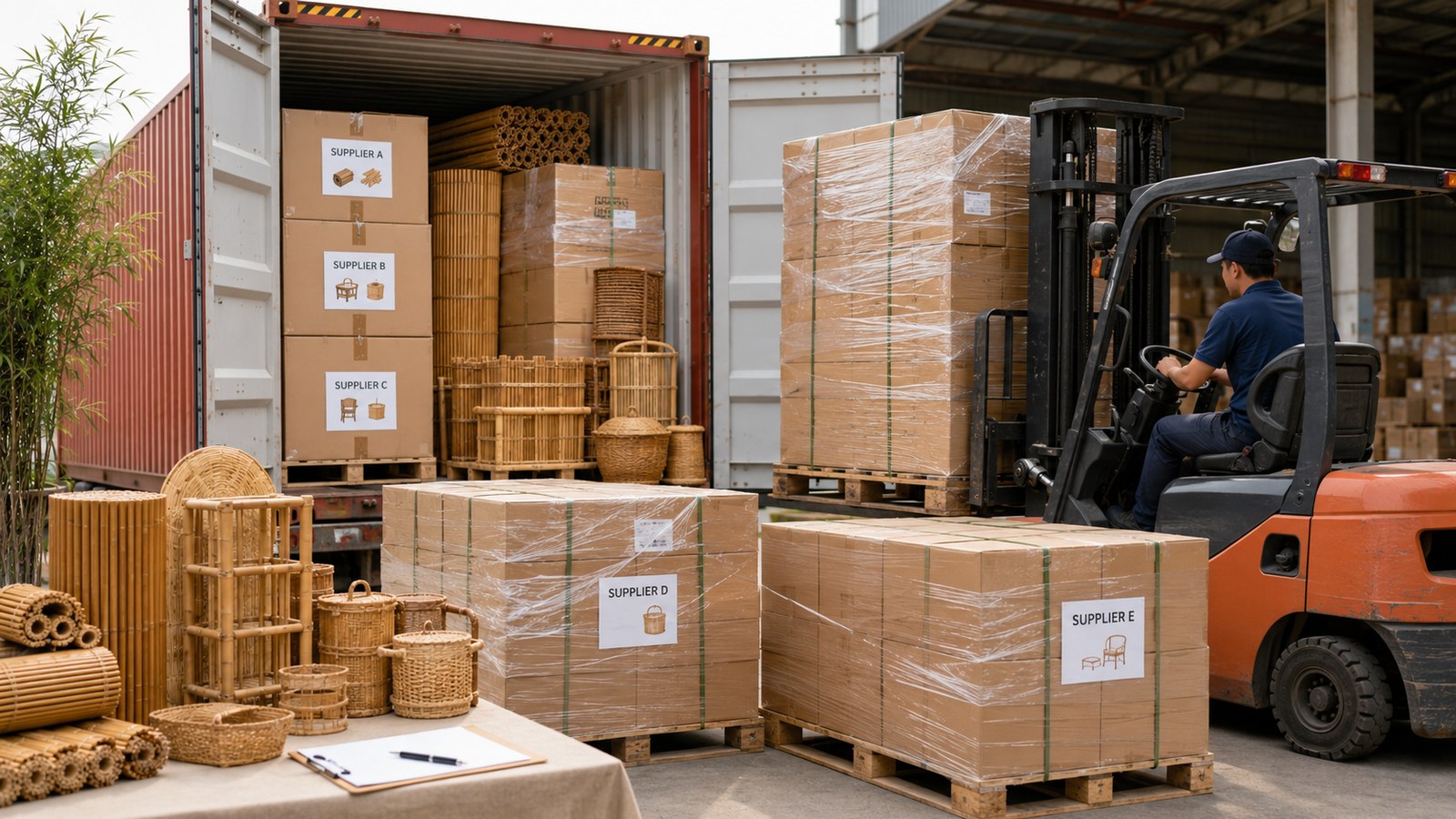
Most Vietnamese exporters quote in full-container terms (1×40HQ, 1×20GP). But a lot of buyer demand is for 5–15 cubic metres — too large for traditional LCL economics, too small for full container. The consolidation play. A sourcing partner aggregates multiple buyers' orders, or multiple product groups for one buyer, into a single container. Each buyer pays per-CBM proportional cost. This works because: - The forwarder books one container, gets one freight rate, pays one set of port fees. - Multiple suppliers deliver to one consolidation warehouse near port. - Inspection, packing, palletising happens in one place. - One bill of lading, one set of customs documents. Cost economics. Pure LCL freight Vietnam-EU runs USD 95–130 per CBM in 2026. Full-container freight is roughly USD 1,800–2,400 per 40HQ (≈68 CBM usable). At full-container rate, the per-CBM cost is USD 26–35 — a 3–4× saving vs LCL. For consolidation to beat LCL, the container needs to be 60%+ full. Below that, the warehousing and handling cost erodes the freight saving. Above that, consolidation always wins. Mixed-supplier consolidation. A common pattern: bamboo fence from Hai Phong, ceramic from Bat Trang, biochar from An Giang. The challenge is timing — all three suppliers must finish production within a 2-week window so the consolidation warehouse doesn't pay extended storage. A sourcing coordinator manages this. Typical 1/3-container minimums. - Volume: ≈22 CBM - Weight: 7–8 t depending on product - Value: USD 8,000–25,000 depending on goods For most buyers, this is the sweet spot for first-trial orders or seasonal restocking. Documentation. Single B/L. Each buyer receives a partial-shipment commercial invoice and packing list. CO (certificate of origin) per buyer-shipment if FTA preferential origin applies. 5B Trading runs monthly Vietnam-EU and Vietnam-AU consolidations. Ask for the next sailing schedule — often saves new buyers weeks vs waiting for full-container fill.