Trade & logistics
EVFTA in 2026: what EU buyers gain by sourcing from Vietnam
Year 6 of EVFTA: most product lines now zero-duty into the EU. What buyers should know about Vietnam origin rules.
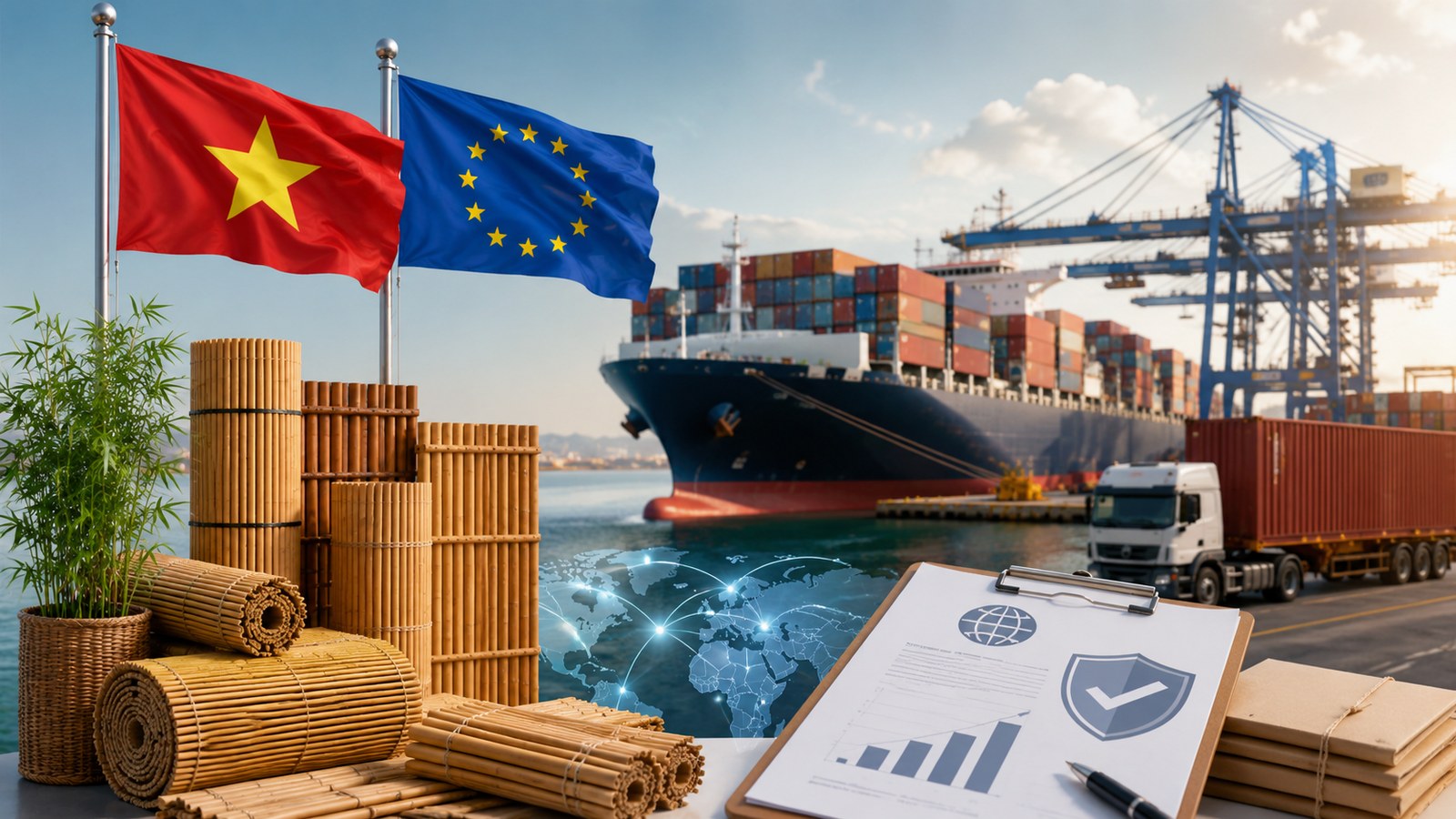
The EU-Vietnam Free Trade Agreement (EVFTA) entered into force in August 2020. By 2026 — its sixth year — the duty schedule has matured, and the buyer-side advantages are now meaningful enough to drive sourcing decisions. Tariff status. Roughly 71% of EU imports from Vietnam were already duty-free at signing. By 2027 that figure rises to 99%. Bamboo products, rattan furniture, paper goods, textiles, and most agricultural processed products now ship at 0% duty into the EU — versus 6–12% for equivalent products from non-FTA origins. Origin rules. EVFTA uses preferential origin certificates (EUR.1 or REX self-certification for shipments under €6,000). The rule of origin is typically "wholly obtained" or "sufficient processing" — for bamboo and rattan, harvested-in-Vietnam plus Vietnamese processing qualifies. For textiles, the "fabric forward" rule applies. REX registration. Vietnamese exporters with REX numbers can self-certify origin without needing chamber-of-commerce stamps. Ask your supplier for their REX number — not having one is a red flag for export readiness. Practical impact. A €1.00 FOB Vietnam item lands in Hamburg at roughly €1.18 CIF (freight + insurance) and clears at €1.18 instead of €1.30 with duty. On a 40HQ container value of €40,000, the saving is €4,000–€5,000. Pitfalls to avoid. Origin fraud is increasingly audited. Goods routed through Vietnam from China without sufficient processing get caught. A reputable Vietnamese supplier should be able to show you the upstream raw material origin. Beyond tariffs. EVFTA also commits Vietnam to ILO labour standards, environmental protections, and anti-corruption measures — which makes Vietnamese sourcing less risky on CSRD and supply-chain due-diligence reporting than alternatives. For EU buyers building 2027–2030 procurement plans, Vietnam under EVFTA is structurally cheaper, more compliant, and more politically stable than most alternatives.